How to Rank on Google Using Advanced AI SEO (Without Sounding Like a Robot)
Ranking on Google isn’t what it used to be. A few years ago, you could stuff keywords into a page, build some backlin...
Read More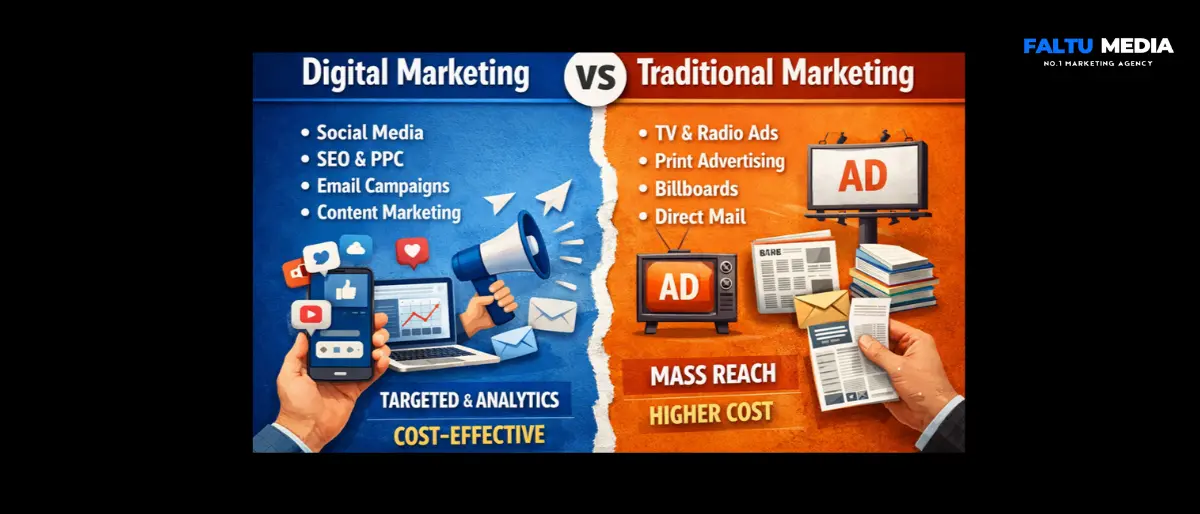
In today’s fast-paced online world, businesses can no longer rely solely on traditional methods to reach their audience.
In today’s fast-paced online world, businesses can no longer rely solely on traditional methods to reach their audience. Whether you're a startup, a small business, or an established brand like Faltu Media, understanding digital marketing is essential for growth and long-term success. This blog will break down everything you need to know—from what digital marketing is, how to learn it, its benefits, and how it compares to traditional marketing.
Digital marketing refers to all marketing efforts that use the internet or electronic devices to promote products or services. Businesses leverage digital channels such as search engines, social media, email, websites, and mobile apps to connect with current and potential customers.
Unlike traditional marketing, digital marketing allows brands to interact directly with their audience, track performance in real time, and adjust strategies accordingly.
Search Engine Optimization (SEO): Improving your website’s visibility on search engines like Google
Social Media Marketing (SMM): Promoting your brand on platforms like Instagram, Facebook, LinkedIn
Content Marketing: Creating valuable content like blogs, videos, and infographics
Email Marketing: Sending targeted emails to nurture leads and customers
Pay-Per-Click Advertising (PPC): Paid ads that drive traffic instantly
Learning digital marketing may seem overwhelming at first, but with the right approach, anyone can master it. Whether you're a student, entrepreneur, or business owner, here’s how you can get started:
Start with foundational concepts like SEO, social media, and content marketing. There are plenty of free resources, blogs, and YouTube tutorials available online.
Enroll in structured courses from platforms like Google Digital Garage, HubSpot, or Coursera. These provide certifications and practical knowledge.
Create your own website or blog. Experiment with SEO techniques, run small ad campaigns, and analyze results.
Stay updated with the latest trends by following digital marketing experts and agencies like Faltu Media.
Internships or freelance projects can help you gain real-world experience and build a portfolio.
Understanding tools like Google Analytics and Search Console is crucial to measure success and optimize strategies.
Digital marketing offers a wide range of advantages that make it more effective and efficient than traditional methods.
Compared to TV or print advertising, digital marketing campaigns are much more affordable and deliver better ROI.
You can target specific demographics, interests, and behaviors, ensuring your message reaches the right people.
With tools and analytics, you can track every click, impression, and conversion.
Digital marketing allows businesses to reach audiences beyond geographical boundaries.
Interactive content, social media, and personalized campaigns lead to better engagement with customers.
Campaigns can be modified instantly based on performance data.
Understanding the difference between digital marketing and traditional marketing helps businesses make informed decisions.
| Feature | Digital Marketing | Traditional Marketing |
|---|---|---|
| Reach | Global audience | Limited to local/regional |
| Cost | Affordable | Expensive (TV, print ads) |
| Targeting | Highly specific | Broad audience |
| Interaction | Two-way communication | One-way communication |
| Measurability | Real-time analytics | Difficult to measure |
| Flexibility | Easy to adjust | Hard to modify once launched |
The answer depends on your business goals. However, in today’s digital-first world, digital marketing clearly has the upper hand due to its precision, scalability, and cost-effectiveness. That said, a combination of both strategies can sometimes yield the best results.
Choosing a reliable PPC advertising service can help businesses generate instant traffic and high-quality leads while maintaining full control over their marketing budget.
If you run a digital marketing agency like Faltu Media, you already know the importance of staying ahead of the curve. Businesses today need more than just a presence—they need visibility, engagement, and conversion.
Digital marketing helps brands:
Digital marketing is no longer optional it’s a necessity. From understanding what it is to learning how to implement it effectively, businesses that embrace digital strategies are more likely to succeed in today’s competitive landscape. Whether you're just starting out or looking to scale your business, investing time in learning and applying digital marketing can make a significant difference. And if you want expert guidance, agencies like Faltu Media can help you navigate the digital world with confidence.
Ranking on Google isn’t what it used to be. A few years ago, you could stuff keywords into a page, build some backlin...
Read More